Equipment Matched to Your Project Type
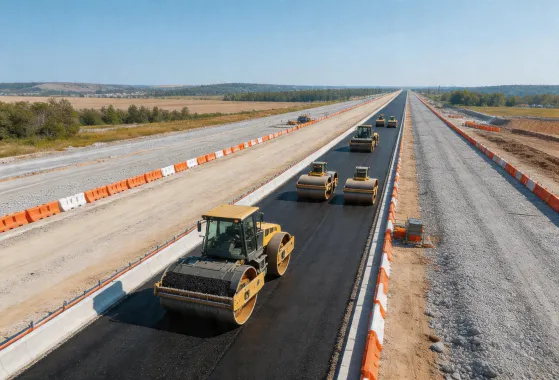
Highway & Motorway Construction
Typical challenge: Multi-layer pavement construction — granular sub-base, asphalt binder course, and wearing course — each requiring different compaction approaches. Long production runs with high daily tonnage targets (500–2,000 t/day).
Bomag recommendation: Combination of single drum vibratory roller (18–25 t) for granular layers + double drum roller (8–14 t) for asphalt intermediate passes + pneumatic tire roller (16–24 t) for final wearing course. Motor grader for sub-grade shaping and camber control.
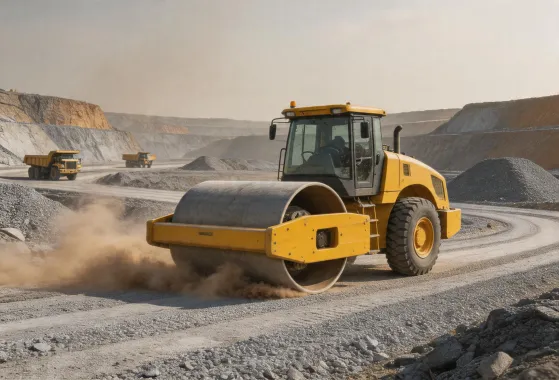
Mining & Quarry Haul Roads
Typical challenge: Crushed aggregate or compacted gravel haul roads that take extreme abuse from heavily loaded trucks (50–200 t payload). Roads degrade rapidly without adequate compaction, driving up truck fuel cost and tyre wear. Frequent re-grading needed.
Bomag recommendation: Heavy single drum vibratory roller (20–30 t) with padfoot drum shell for deep-lift compaction of granular material. Motor grader with all-wheel drive for haul road maintenance grading. Road gravel compaction to 95% Modified Proctor density target.
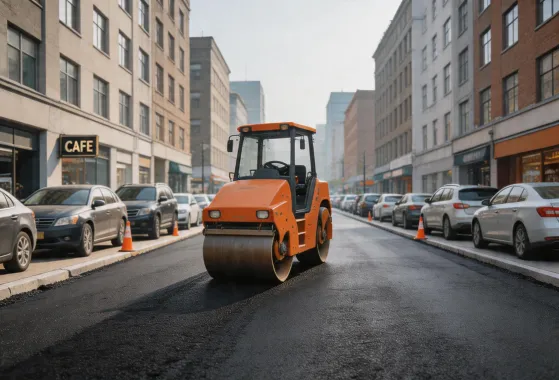
Urban Road Resurfacing & Utility Trenches
Typical challenge: Confined working areas, noise restrictions in residential zones, utility service interruption time limits, and variable patch sizes. Standard full-width rollers won't fit and standard compaction frequencies exceed noise bylaws.
Bomag recommendation: Tandem vibratory roller (1.5–4 t) for narrow urban lanes and patching. Walk-behind plate compactors (reversible, 300–600 mm wide) for trench backfill. Low-noise operating mode (amplitude reduced, frequency adjusted) available on select models to meet 75 dB(A) site requirements.