-
I Buy Equipment for a Living, and I’m Tired of the Cheapest-Quote Game
-
The Sticker Price Is Just the Entry Fee
-
The Hidden Costs Aren’t Hidden—They’re Just Not Line Items
-
What Bucket Golf Taught Me About Buying Equipment
-
Use the BOMAG Dealer Locator Before You Search For a BOMAG Plate Compactor for Sale
-
“But Our Budget Can’t Handle It” — Here’s My Response
-
Bottom Line: Price Is What You Pay, Value Is What You Get
I Buy Equipment for a Living, and I’m Tired of the Cheapest-Quote Game
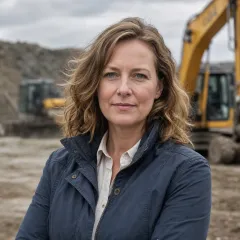
I’m the office administrator for a 40-person construction firm. I manage equipment and facility service ordering—roughly $450,000 a year across 8 vendors. I report to operations and finance, so I hear about every mistake in both profit and loss.
Here’s my opinion, stated plainly: the cheapest BOMAG plate compactor for sale is usually the most expensive machine you’ll ever own. Not because the upfront price is a trick. Because most of the cost—downtime, delays, rework, and the service relationship after the sale—shows up later on your budget.
I didn’t always think this way. When I took over purchasing in 2020, I compared specs, prices, and lead times like a spreadsheet. Then the vendor failure in March 2023 changed how I think about backup planning. One critical deadline missed, and suddenly redundancy didn’t seem like overkill.
The Sticker Price Is Just the Entry Fee
It’s tempting to think you can compare unit prices. “BOMAG plate compactor for sale at one price and another model at a lower price. Same size, similar specs, buy the cheaper one.” That’s the kind of logic that sounds reasonable in a meeting and falls apart on a jobsite.
In 2020, I would have bought the cheaper machine without a second thought. After enough failures, I started asking different questions:
- Parts availability—how fast can I get a filter or a hydraulic hose?
- Service response—can the dealer send a technician, or is it phone-only?
- Operator familiarity—will my crew know how to set it up and maintain it?
- Resale value—what will this machine be worth in five years?
Three things matter most: parts availability, service response, and operator familiarity. In that order. Price isn’t even in the top three.
In our 2024 vendor consolidation project, I reduced our vendor list from 14 to 8. That exercise taught me that switching to a lower-priced supplier is itself a hidden cost. You pay for evaluation, onboarding, invoicing setup, and the risk of a new relationship. Sometimes the cheapest quote takes 30 days to set up and then misses the first deadline. That’s not saving. That’s borrowing a problem.
The Hidden Costs Aren’t Hidden—They’re Just Not Line Items
Here’s the thing: most of those hidden costs are avoidable if you ask the right questions upfront. But if you don’t, they become line items with a different name.
In 2022, I saved $800 by buying a “comparable” plate compactor instead of the BOMAG model the site supervisor recommended. It made sense on paper. Same centrifugal force. Similar engine power. Then the engine mount cracked on its third job. The rental unit we needed while waiting for repairs cost $1,100. The rework cost another $900. The original $800 savings turned into a $2,700 problem.
I also assumed “same specifications” meant identical results across vendors. Didn’t verify. Turned out each had slightly different interpretations of vibration frequency and amplitude. The machine couldn’t hit density on a clay soil section. We had to re-do the whole pass.
Processing 60-80 orders annually gives me plenty of data points. The vendors with the lowest quotes were not always the ones with the lowest total invoices. Their invoices just came in smaller pieces: repair order, rush delivery, rental equipment, overtime. Finance sees the pieces. They don’t see the original price comparison you made.
People think expensive vendors deliver better quality. Actually, vendors who deliver quality can charge more. The causation runs the other way. A higher price can be a signal of investment in engineering, support, and reliability—not an attempt to rip you off.
What Bucket Golf Taught Me About Buying Equipment
Last fall, the company rented a field for an outing, and someone set up bucket golf. For anyone who hasn’t tried it: the goal is to land a golf ball in a five-gallon bucket. It looks easy. Then wind, grass, and the angle of the bucket happen. Your first shot bounces right out.
Equipment buying feels like bucket golf. On paper, it’s simple—almost like answering those “are you smarter than a 5th grader questions” where the answer seems obvious. The spec sheet says this compactor has the same numbers as that compactor. So the answer seems clear. But the real question is whether it performs hour after hour, on dusty sites, with an operator who isn’t thinking about the manual.
That’s also why I lean on established equipment and tool brands. Not because they’re flawless, but because the risk profile is better. Compare a no-name air compressor with a Milwaukee air compressor. Same PSI, same tank size, different track record. If my crew’s productivity depends on it, I’m not gambling on the “same on paper” option.
Use the BOMAG Dealer Locator Before You Search For a BOMAG Plate Compactor for Sale
If you’re considering any BOMAG equipment, use the BOMAG dealer locator before you make a decision. That sounds like a boring step, but it might be more important than the machine’s brochure.
Not all dealer listings are equal. One dealer might stock parts and have a service bay. Another might only take online orders. Same brand, different support. I learned to call instead of assuming. Ask how fast they can source a part. Ask if they have rental units. Ask what the warranty turnaround time looks like. The dealer locator is a starting point, not a guarantee.
I like to identify a primary dealer and a backup dealer. One time, our main dealer didn’t have a part, but the secondary dealer was able to overnight it. If I hadn’t checked both, we would have waited three weeks. That kind of planning is free. It just doesn’t happen when you buy based on price alone.
I’m not 100% sure every premium brand pays off in every industry. Take this with a grain of salt. But for our work, the cost of being wrong is too high. A machine sitting idle while we wait for a part costs far more than the difference between two quotes.
“But Our Budget Can’t Handle It” — Here’s My Response
Look, I’m not saying budget options are always bad. I’m saying they’re riskier. And risk has a cost, even if it isn’t on the invoice.
If your budget is tight, calculate the total cost over three years. Say the cheap machine costs $2,000 less. It fails once and costs you a week of labor. If the week of labor and delay costs more than $2,000—and it usually does—the cheap machine wasn’t actually cheaper.
Then again, I understand why people chase the lowest price. Nobody gets fired for saving the company money. But in my experience, you get more credit for avoiding a costly failure. The calculation should include schedule risk, safety, and the likelihood of repeated breakdowns.
Per FTC advertising guidelines (ftc.gov, accessed January 2025), claims need to be truthful and substantiated. But a spec sheet isn’t a service plan. Ask for a demo. Rent the equipment for a week. Talk to actual operators. The lowest number on the screen shouldn’t be the deciding factor.
Bottom Line: Price Is What You Pay, Value Is What You Get
So, bottom line: the next time you search for a BOMAG plate compactor for sale, don’t stop at the price. Open the BOMAG dealer locator. Call them. Ask about parts, service, and support. Then compare machines, not just numbers.
Honestly, I wasn’t planning to become the equipment expert on our team. I just got tired of explaining budget variances to my VP. Once I started buying based on total value instead of the lowest quote, our equipment-related expenses became a lot easier to predict.
Price is what you pay. Value is what you get. And the cheapest purchase often costs the most.